Author Archives: anhaga1

A Stone

Standard

A smooth oval stone, fitting nicely in my hand, charcoal grey at one end shading to burnt sienna with subtle lines of something translucent, polished by years of tumbling in surf and sand.

Stones are so old. We value “old” objects, things passed down from our parents and grandparents. We treasure art from centuries ago, prize structures that have withstood the elements or the destruction of war for thousands of years. But this stone was made in the crucible of our planet millions of years ago and I tread on it and countless others like it every day, without a single thought about its antiquity. I do not understand the miracle of how it, or any of what we see and hear and touch, ever came to be.

Evolution/devolution

Standard

There is no doubt that the human species has changed our planet quite significantly. Are we a force for evolution, like the oxygen-producing bacteria of billions of years ago, the ones that poisoned the world for the creatures then extant, and made it habitable for new creatures, like us? It would be exciting if this were the case.

I read somewhere that the average human being already contains about three pounds of plastic in her body cells. Are we gradually going to become capable of living in outer space or on other planets? With new technologies, as well as the natural selection that living in our polluted world engenders, maybe we are evolving into some sort of starchildren.

And yet, and yet…. Every atom in our bodies was made inside a star. We are already starchildren. The inanimate has already learned how to become intelligent; it has already become self-aware by developing biological processes of which we are a flower or fruit. What I think is happening now is a sort of devolution as we slowly relinquish our biological being, with all its attendant messiness and unpredictable creativity, and slip into a terrible eternity of machine existence.

Patience of the Animals

Standard

On a train travelling through the English countryside, the train window framing the scenery.  Here is a sky full of bands of dark rain-laden clouds, here a spring green field, and here a horse in a bright blue blanket.  The gorse is blooming, and there are many animals: huge numbers of sheep, as though we were shaving the trees from the hills and turning them into sheep, herds of cattle, horses, a few geese.  At the edge of the frame two deer bound.  I am struck by the patience of the animals.  We made a pact with them, which we break when we abuse them, when we refuse to give them a proper life before we use them.  Our part of the bargain was to treat them with kindness, shield them from pain and fear, keep them safe from wolves and starvation, providing a good and painless death whereupon they would become part of the human substance.  How we have betrayed these creatures!

Lifetime

Standard

A recent birthday prompted a conversation about age.  A friend is in total denial about aging,  “No” she says, “you’re not old!”  As though that were a terrible thing.  Being, I would say, on the cusp of old age (but vigorous, not frail) I feel that there is some merit in having lived so long and I no longer want to deny the fact.  The problem is partly one of semantics.  Nowadays we would not say that a thirty-five year old is middle aged, although in fact they are.  Yet there is a big difference between the youth of one who is in their mid-thirties, and one who is, say, nineteen or twenty.  Just as the word “tween” has come to describe that awkward period where a child is not yet a youth, but certainly not like a seven or eight year old child, we need words to describe the time between young adult and middle age, and the time between middle age and old age. 

As a child I remember observing the older people in my community.  I was very aware of the two kinds of elders who lived amongst us.  There were the vigorous ones, with strong voices, who fully participated in life.  Then there were the frail ones.  I understood that when a vigorous elder moved into the frail category, they would soon die.  This was in the mid twentieth century when the frail did not survive as long as perhaps they do today.  One day a man or woman was hale, the next their voices began to quaver and their bodies seemed to shrink, and a few weeks or months later they were gone.
What does “anhaga” mean?

Standard

Anhaga is an Old English word which can be translated as “lone one”, or “solitary warrior.” I use it to mean “lone wanderer.”  Since my earliest days I have felt alone.  Here is a verse from a poem composed when I was perhaps seventeen or eighteen, and even then I was building on a body of work which had this as a recurrent theme:

The wanderer walked along his life,

His heart his load,

No friend had he in all the world

Except the road.

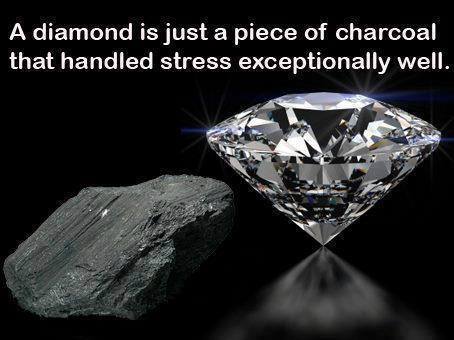
Diamond

Image

Diamond

Acknowledgements:  Found on Facebook – Catalyzing Change — with Mario Poutzo, Chamila Perera, Rens de Leur, Marche Je te Suije, Sirirat Silakotr, Anita Kolckhorst, Cher Koziol, Erica Leok, Ahmad Ali Khan, EL Mirou, Melissa Leach, Beto Musso, Ayesha Murady and Rachael M. Rudolph.